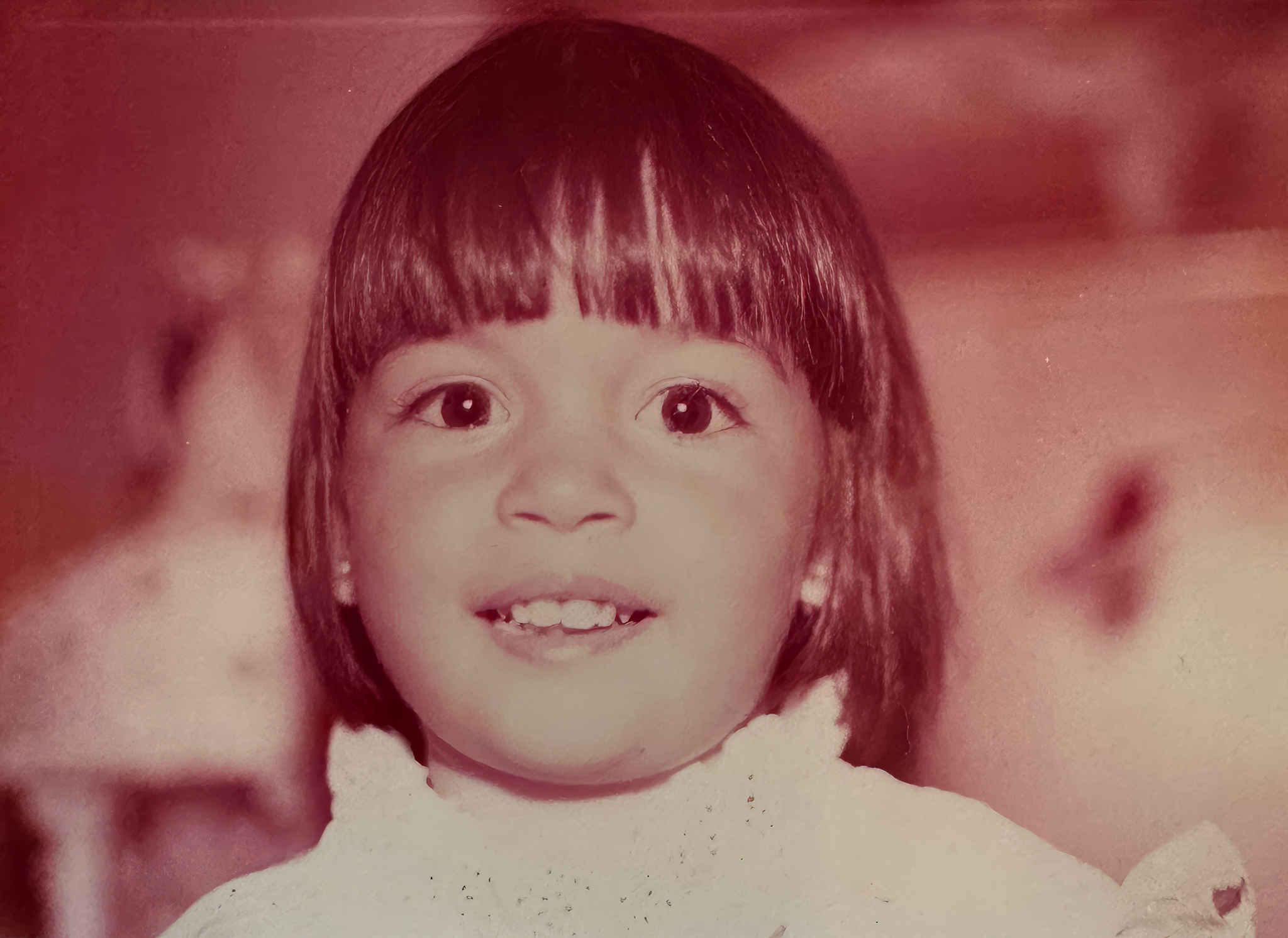
Chapter 5 – Winnie, San Pedro Sula, Honduras
Penguins

In her 10th-grade classroom in San Pedro Sula, there he suddenly was. Who was this boy from Bolivia who, because of his father’s job, had ended up in the same class as her? Winnie had to find out.
Three months later, Winnie is jolted awake at eight o’clock sharp by the shrill sound of the doorbell. Her mother snaps at her, asking if she’s forgotten she had plans.
Out front is a car. Inside: Bruno, her new Bolivian boyfriend and his German stepfather. Arguing.
They had agreed to meet at eight for their first little trip together. To Winnie, that meant she should be ready to leave sometime in the morning. Back then, she didn’t even know the cliché about the punctual German. She moves faster than she ever has, trying to somehow smooth things over.
A year and a half later, Bruno’s family moves back to Bremen, and suddenly there’s an entire ocean between them. They start their studies—Bruno in logistics, Winnie in the travel industry—and a long-distance relationship that would last nine years.
Back then, in 1999, distance was a different reality than it is today.
It’s a time of intense letter-writing and short monthly long-distance calls that can’t last more than five minutes. The expensive line crackles so badly you can barely understand the voice on the other end. They see each other once a year—sometimes in Germany, sometimes in Honduras, sometimes meeting halfway. Their relationship can take it.
In their final year of university, they decide to get married. For Winnie’s family, this matters a lot. She grew up very traditionally—and the two of them finally want to be together.
They get married, and in 2008 Winnie moves to Germany, to Hamburg. A quiet, introverted young woman from Honduras who barely speaks a word of German. She takes the language classes that are offered—but that doesn’t keep her from struggling in the working world. Not because she can’t do the job, but because people love to turn language into a verdict. One tiny pause—reaching for a plain word like “broom closet” or “utility closet”—and suddenly that’s all they see.
And it doesn’t keep an employee at the immigration office from implying she only married for the passport.
That accusation sticks. It turns her marriage into something suspicious—on paper, in a waiting room, from behind a desk.
People start labeling her as the person “who doesn’t speak German very well.” She hates it. She hates this complicated language with all its rules. She hates Hamburg. She hates this country with its gray weather—and the people who are often unfriendly to her. She’s homesick—but she loves her Bruno.
She takes more German classes, paying privately out of what little money they have. She applies again and again. She has good experiences, bad experiences. She meets people who encourage her, who support her. And still—because of her accent, the confusing articles that seem to follow no rule—she becomes a target for mockery by people who, most of the time, have never had to learn a foreign language themselves.
At one point she almost gives up. Resignation is right there. But she keeps pushing.
Then, finally, a break: she gets a real chance in the form of a good job at a respected hotel in Hamburg. She has her own small office. She’s in charge of group reservations.
Bruno and Winnie decide they want children. Each of them, on their own, perfectly healthy—but together, it just doesn’t work.
After IVF, her first miscarriage. Two more follow.
Not only in traditional Catholic families in Honduras are the roles clearly defined—the woman’s task summed up in just a few words, and marriage, essentially, there for children. And now, everywhere Winnie looks, she sees young mothers and pregnant women.
It hits hard. There’s family pressure, and still no baby. And it isn’t only the pressure from the outside—Winnie feels more worthless than she ever has.
She has her little office at the hotel, and she cries all day. She becomes depressed.
Bruno stays by her side. At some point, they stop trying.
Today, two small white dogs—Westies—are Winnie’s constant companions.
Bruno was Winnie’s first boyfriend. Winnie was Bruno’s first girlfriend.
“You know,” Winnie says to me at this point, “we’re like penguins.”
Winnie discovers yoga on YouTube.
The girl on that channel says she should pick one difficult pose and commit to it for 30 days. Winnie chooses a handstand.
She cries during the day in her office, and afterward she does three hours—four hours—of yoga every day, until she’s completely exhausted.
It feels like an escape. She throws herself into work and into her new drug: yoga channels on YouTube.
At first, shy Winnie avoids studios. She still feels tense about strangers speaking to her in German. But eventually someone convinces her to go, and she takes a class.
After a few hours, the instructor pulls her aside and asks where she has been training. She can’t believe Winnie taught herself all of this alone through YouTube—without feedback, without filming herself, without a big mirror to watch and correct herself. The instructor doesn’t believe her at first.
That’s the moment Winnie opens a new chapter: another training program, again in German.
For over a year, Winnie sits in class during the day with a recorder, then spends her evenings working through the recordings with dictionaries. Anatomy. Yoga philosophy. Meditation. In class, she knows the answers—but before she can find the German words and overcome her shyness, the questions are usually already answered.
“Okay, next time!” And again she hesitates—trembling, cheeks burning at the thought of being wrong or saying something incorrectly. Around her are women who’ve practiced yoga for many years longer than she has.
Winnie loves the difficult stuff: the physical challenge. Arm balances. Tricky transitions between poses. Budokon yoga.
In 2017/2018, Winnie starts uploading her own videos. Instagram is just beginning to explode. In her yoga teacher training classes, it happens more and more often that participants chant: “Winnie, Winnie—this pose is crazy! Show us!” Suddenly she’s the center of attention—trembling, face bright red, and far too quiet in her explanations, as her instructor keeps telling her.
…
September 2024: Winnie opens her own yoga studio.
These days she doesn’t shake quite as much as she did in the beginning. She has people around her who love her for her “exotic” status—once a word that bothered her, now one she uses on her own terms—along with her sweet accent and her distinctive yoga style.
Still, I wouldn’t be surprised if, now and then, someone in the last row—on a crowded mat in her own studio—can’t quite understand her clearly.
Winnie picked up punctuality from Bruno and Horst, his stepfather. In fact, she’s usually almost a little too early.
I arrive at the gym in Hamburg. I’d arranged to meet Carlo and Jake here—whose stories are coming next. Winnie opens the door. Yes, Carlo told her—he’s running a little late.
Two curious Westies inspect me while I start carrying my gear inside.
“Oh,” she asks, “you’re taking photos of the training?”
I tell Winnie about my new project, IMMIGRANTS. And just like that—spontaneously—Winnie joins in. We move her shoot up. The next appointment is already waiting.
Do you suddenly feel like telling me your story, too?
Come talk to me.